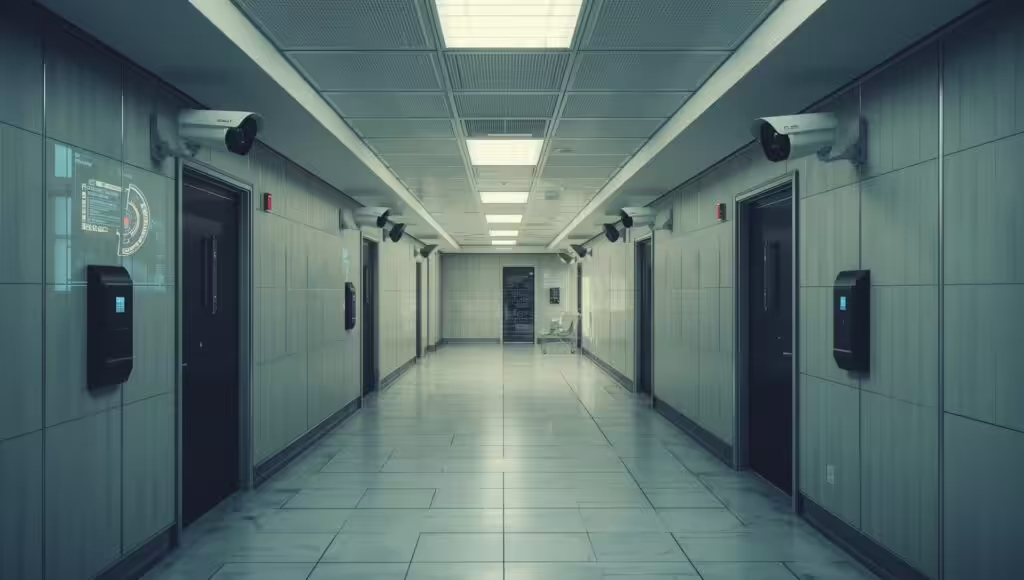
Security technology moves fast. Just a few years ago, commercial CCTV was largely about recording footage to a local hard drive and hoping the image quality was clear enough to be useful after an incident occurred. Today, the landscape looks very different.
For business owners and facilities managers across Scotland, from Glasgow to Edinburgh, the expectation for what a security system can do has shifted. It is no longer just about reviewing what happened in the past. It is about intelligent monitoring, proactive alerts, and systems that help run a safer, more efficient business in real time.
As we look toward 2026, understanding these technological shifts is vital for anyone planning to install or upgrade a system. Investing in the right technology now ensures your premises remain secure, compliant, and ready for the future, rather than relying on outdated hardware that may struggle to keep up with modern threats.
How CCTV Technology Has Changed
The biggest change in recent years is the move from passive recording to active intelligence. Older analogue systems were often grainy and difficult to search through. If an incident occurred, you might spend hours reviewing footage.
Modern IP-based systems offer crystal-clear high-definition video. More importantly, they are smarter. They can tell the difference between a person, a vehicle, and a swaying tree branch. This drastically reduces false alarms and ensures that when your security team or monitoring station is alerted, it is for a genuine reason. This shift means CCTV is now a proactive tool that helps prevent crime before it happens, rather than just providing evidence after the fact.
Top CCTV Technology Trends for 2026
If you are considering a new CCTV installation in Glasgow or elsewhere in Scotland, it is worth knowing what features are becoming standard for commercial setups. Here are the key trends driving the industry forward.
AI-Powered Video Analytics
Artificial Intelligence (AI) is transforming how cameras process images. Instead of just recording movement, AI analytics can identify specific behaviours. This might include loitering in a restricted area, a vehicle driving the wrong way, or an object left unattended in a public space.
For businesses, this means your cameras act as a second pair of eyes. They can alert you instantly to suspicious activity, allowing for a quicker response. It removes the reliance on a human operator spotting every single detail on a bank of monitors.
Smart Motion Detection and Behaviour Recognition
False alarms are a major nuisance for business owners and monitoring stations. Traditional motion detection was often triggered by rain, shadows, or animals.
Newer smart motion detection filters out these non-threats. It focuses specifically on human or vehicle shapes. Behaviour recognition takes this a step further by identifying unusual patterns, such as someone trying to force a door or climbing a fence, ensuring that alerts are meaningful and actionable.
Cloud-Based CCTV Storage and Remote Access
The days of relying solely on a physical recorder tucked away in a cupboard are fading. Cloud storage allows footage to be saved securely off-site. This protects your data even if the physical recorder is damaged or stolen during a break-in.
Remote access is also a standard requirement for modern security systems in Glasgow. Business owners want the ability to check in on their premises from a smartphone or laptop, whether they are at home or travelling. This connectivity provides peace of mind and instant visibility of your operations.
Higher Resolution and Low-Light Performance
Image quality continues to improve. 4K resolution is becoming more accessible for commercial applications, providing incredible detail. This is crucial if you need to identify faces or read number plates at a distance.
Perhaps more important for Scottish businesses is low-light performance. Given our long winter nights, cameras need to perform well in darkness. Modern sensors can capture full-colour images in very low light conditions, offering far more detail than the grainy black-and-white night vision of the past.
Integration with Intruder Alarms and Access Control
A standalone CCTV system is useful, but an integrated security ecosystem is powerful. In 2026, we expect to see even tighter integration between cameras, alarm systems in Glasgow, and access control.
For example, if an intruder alarm triggers, a camera can automatically pan to that specific zone and stream footage to the security team. If a door is forced open, the access control system can flag the event while the CCTV captures the perpetrator. This unified approach makes managing site security much simpler and more effective.
Cybersecurity and Data Protection
As cameras become connected devices, cybersecurity becomes critical. Manufacturers are placing a heavy focus on encryption and secure protocols to prevent hacking.
For businesses, this means ensuring your installer uses equipment that meets strict cyber standards. It also involves regular firmware updates and secure network configurations to protect your sensitive surveillance data from cyber threats.
What These Trends Mean for Scottish Businesses
Adopting these technologies brings tangible operational benefits. It is not just about having the newest gadgets. It is about solving real business problems.
Better Loss Prevention
High-resolution cameras and smart analytics make it much harder for theft to go unnoticed. Whether it is internal shrinkage or external theft, clear evidence and immediate alerts act as a strong deterrent and a powerful tool for recovery.
Improved Staff Safety
Intelligent monitoring helps protect your team. Cameras can cover car parks, entrances, and lone-worker areas more effectively. If a staff member is in a potentially unsafe situation, integrated systems can alert security personnel immediately.
Operational Visibility
CCTV is increasingly used for operational management. You can monitor footfall in a retail store, check that health and safety protocols are being followed in a warehouse, or ensure that loading bays are operating efficiently. It gives you a clear view of your business performance.
Compliance and Liability
With clearer footage and secure storage, you have reliable evidence if a liability claim is made against your business. Whether it is a slip-and-fall accident or a dispute with a supplier, having high-quality video evidence can save a significant amount of time and legal costs.
The Importance of Professional Installation
While the technology is impressive, it is only as good as the installation. Advanced systems require expert design to function correctly. A poorly positioned camera or a network bottleneck can render even the most expensive equipment useless.
This is why working with accredited installers is essential. NSI Gold accreditation, for example, demonstrates that a company adheres to the highest industry standards. It ensures that your system is designed to meet your specific risks, installed safely, and maintained to ensure long-term reliability.
Professional installation also ensures you remain compliant with data protection laws. There are strict rules regarding where you can film and how footage is stored. An expert installer will guide you through these requirements, ensuring your system is both effective and legal. This applies equally to other safety systems, such as smoke alarms in Scotland, where compliance is non-negotiable.
When Should Businesses Upgrade Their CCTV?
Knowing when to replace your system can be tricky. However, there are clear signs that your current setup might be leaving you vulnerable.
- Poor Image Quality: If you cannot clearly identify faces or actions in your recorded footage, your system is not doing its job.
- Lack of Remote Access: If you cannot view your cameras unless you are physically on-site, you are missing out on vital flexibility.
- Frequent Faults: If cameras are regularly going offline or the recorder needs constant restarting, the hardware is likely reaching the end of its life.
- Compatibility Issues: As you try to add new cameras, you may find they are not compatible with your old recorder. This is a common bottleneck with ageing systems.
- Cybersecurity Risks: Older systems may not have the necessary security protocols to defend against modern cyber threats.
Looking Ahead to 2026 and Beyond
The future of security is connected, intelligent, and scalable. Systems installed today should be built with the future in mind. This means choosing open platforms that can integrate with new software and hardware as it becomes available.
We can expect AI to become even more refined, reducing false alarms to near zero. We will likely see further convergence between physical security and cybersecurity. For Scottish businesses, the goal is to build a security infrastructure that grows with you, adapting to new challenges without needing a complete rip-and-replace every few years.
Conclusion
Understanding the trends shaping the CCTV industry helps you make smarter investment decisions. By moving away from outdated analogue systems and embracing AI analytics, cloud storage, and integration, you build a security layer that actively protects your business.
Reliability and compliance are the foundations of effective security. Investing in the right technology, installed by accredited professionals, ensures that your assets, staff, and operations remain secure around the clock.
If you are planning to upgrade your CCTV system or want advice on the right setup for your premises, speaking with an experienced, accredited installer can make all the difference. Contact us now!